Business Setup Dubai
Navigating the Gateway to Global Commerce: A Guide to Business Setup in the UAE’s Dubai Mainland and Free Zones
The United Arab Emirates has firmly cemented its position as a global epicenter for trade, finance, and innovation. Its strategic geographical location, coupled with a visionary government, has created a dynamic and prosperous economic landscape. For entrepreneurs across the globe, the UAE presents a compelling proposition: a stable, low-tax environment with world-class infrastructure and unparalleled access to international markets across the Middle East, Africa, Europe, and Asia. The allure is further magnified by a streamlined regulatory framework designed to attract foreign investment and foster growth. This powerful combination of limited regulations and market accessibility makes the UAE a top-tier destination for launching a new venture.
For any entrepreneur looking to establish a presence, the first and most critical decision is choosing the right jurisdiction: setting up on the Mainland or within one of the country’s numerous Free Zones. Each path offers a distinct set of advantages and operates under a unique legal framework. Understanding the nuances of these two options is fundamental to building a successful and sustainable business in the UAE. This guide will provide a comprehensive overview of both mainland and free zone setups, helping you determine the optimal structure for your enterprise.
The UAE Mainland: Unrestricted Access and Integration
A mainland company is an onshore entity registered with the Department of Economic Development (DED) in the respective emirate (e.g., Dubai DED, Abu Dhabi DED). This is the traditional route for company formation and offers the most flexibility in terms of trade and location.
Key Advantages of a Mainland Setup:
- Freedom of Trade: The most significant benefit of a mainland license is the complete freedom to conduct business anywhere in the UAE and across its borders without restriction. Mainland companies can trade directly with the local market and other mainland businesses, and they are eligible to bid for lucrative government contracts and tenders.
- No Geographical Restrictions: Unlike free zone companies that are typically restricted to operating within their designated zone, a mainland business can establish its office and operate from any commercial location within the emirate it is registered in.
- Wide Range of Business Activities: The DED offers a vast list of over 2,000 permissible business activities, covering nearly every industry imaginable. This provides entrepreneurs with immense flexibility to diversify and expand their operations.
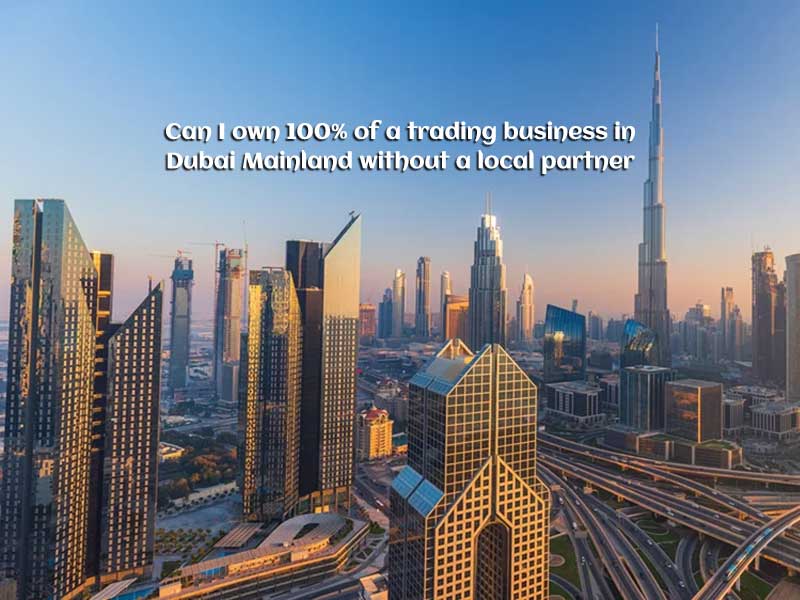
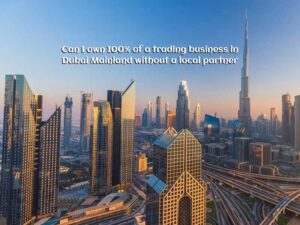
- 100% Foreign Ownership: A landmark reform in UAE commercial law now allows for 100% foreign ownership for the majority of business activities on the mainland. This has been a game-changer, eliminating the previous requirement for a UAE national to hold a 51% stake in the company. While some strategic sectors (like banking and insurance) still have specific ownership regulations, most commercial and industrial activities are fully open to foreign investors.
The Mainland Setup Process:
The journey to establishing a mainland company involves several key steps, all managed under the purview of the DED:
- Activity and Legal Structure Selection: The first step is to define your business activities and choose the appropriate legal form, such as a Limited Liability Company (LLC), a Sole Establishment, or a Civil Company.
- Trade Name Reservation and Initial Approval: You must select a unique trade name that complies with UAE naming conventions and secure an Initial Approval Certificate from the DED, which signifies the government’s consent to proceed with the formation.
- Memorandum of Association (MOA): For multi-shareholder companies like an LLC, a notarized MOA must be drafted, outlining the ownership structure and responsibilities of each partner.
- Securing a Physical Office: A registered physical office address is a mandatory requirement for a mainland license. This is verified through an Ejari (lease registration) certificate.
- License Issuance: Once all documents are submitted and fees are paid, the DED will issue the final trade license, officially permitting the business to commence operations.
The UAE Free Zones: A Hub for Global Enterprise
UAE Free Zones are designated economic areas that offer special tax incentives and customs privileges to expatriate investors. There are over 40 free zones across the UAE, many of which are tailored to specific industries, creating dynamic ecosystems for sectors like technology, media, finance, and logistics.
Key Advantages of a Free Zone Setup:
- 100% Foreign Ownership: This has always been the cornerstone of the free zone model. Entrepreneurs retain full ownership and control of their business without the need for a local partner.
- Tax Exemptions: Free zone companies benefit from a 0% corporate and personal income tax guarantee for a specified period (often renewable). They are also exempt from import and export duties on goods traded within the free zone.
- Full Repatriation of Capital and Profits: Investors have the freedom to transfer 100% of their capital and profits back to their home country without any currency restrictions.
- Streamlined Setup and Support: Free zone authorities act as a one-stop shop for all registration, licensing, and visa processing needs. This simplified and fast-tracked process, combined with dedicated administrative support, is highly appealing to foreign entrepreneurs.
- Industry-Specific Infrastructure: Many free zones offer state-of-the-art infrastructure, modern facilities, and networking opportunities tailored to their specific industry focus. For example, Dubai Media City caters to media companies, while Jebel Ali Free Zone (JAFZA) is a global hub for logistics and trade.
The Free Zone Setup Process:
While the process varies slightly between different free zone authorities, the general steps are as follows:
- Choosing the Right Free Zone: The most crucial step is selecting a free zone that aligns with your specific business activity and budget.
- Application and Document Submission: This involves submitting an application form along with required documents, such as passport copies of the shareholders and a business plan.
- Company Registration: Upon approval of the initial application, the free zone authority will register the company name and legal structure.
- Licensing and Visa Processing: The authority will issue the business license and facilitate the process of obtaining residence visas for shareholders and employees.
- Office Space: While some free zones allow for flexible desk options (flexi-desk), others may require a physical office or warehouse within the zone.
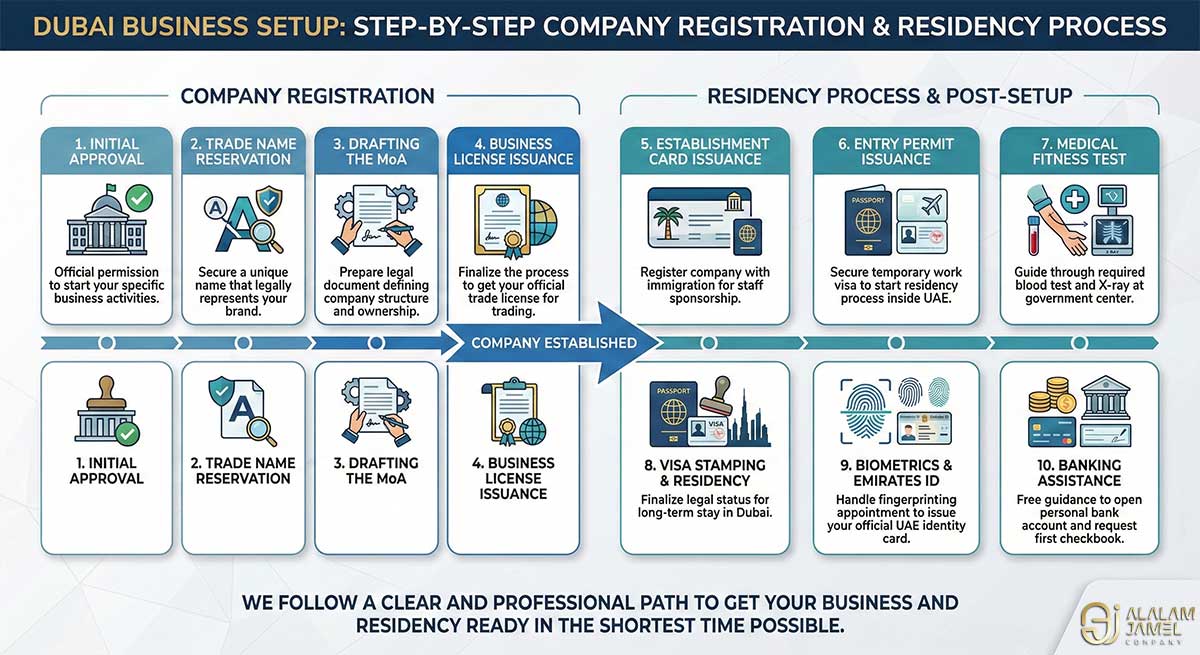
Step-by-Step Company Registration and Residency Process
We follow a clear and professional path to get your business and residency ready in the shortest time possible:
- Initial Approval: We obtain official permission from the government to start your specific business activities.
- Trade Name Reservation: We help you choose and secure a unique name that legally represents your brand.
- Drafting the Memorandum of Association (MoA): We prepare the legal document that defines the structure and ownership of your company.
- Business License Issuance: We finalize the process to get your official trade license so you can start trading.
- Establishment Card Issuance: We register your company with the immigration authorities to allow for staff sponsorship.
- Entry Permit Issuance: We secure the temporary work visa that allows you to start your residency process inside the UAE.
- Medical Fitness Test: We guide you through the required blood test and X-ray at a government health center.
- Visa Stamping and Residency: We finalize your legal status in the system for your long term stay in Dubai.
- Biometrics and Emirates ID: We handle your fingerprinting appointment to issue your official UAE identity card.
- Banking Assistance: We provide free guidance to open your personal bank account and request your first checkbook.
Dubai Mainland vs. Free Zone: A Comparative Snapshot
| Feature | Mainland Company | Free Zone Company |
| Ownership | 100% foreign ownership for most activities. | 100% foreign ownership is standard. |
| Scope of Business | Can trade freely across the entire UAE and internationally. Eligible for government contracts. | Primarily permitted to trade within the free zone and internationally. Direct trade with the UAE mainland requires a local distributor. |
| Office Location | Can rent an office anywhere in the emirate. Physical office is mandatory. | Must have a registered address within the specific free zone. Flexi-desk options are often available. |
| Visas | Visa eligibility is generally tied to the size of the office space. | Visa eligibility depends on the package chosen with the free zone authority. |
| Government Approvals | Requires approvals from the DED and potentially other ministries depending on the activity. | All approvals are handled by the respective free zone authority. |
| Taxation | Subject to the 9% UAE Corporate Tax on profits exceeding AED 375,000. | Often benefit from a 0% corporate tax rate as “Qualifying Free Zone Persons” if certain conditions are met. |
Making the Right Choice for Your Venture
The decision between a mainland and a free zone setup hinges entirely on the nature and ambition of your business.
- Choose Mainland if: Your primary target market is the local UAE population. You plan to bid for government projects, or your business requires a physical presence (like a retail shop or a restaurant) in a specific location outside of a free zone.
- Choose a Free Zone if: Your business is primarily focused on international trade, import/export, or providing services to clients outside the UAE. You prioritize 100% ownership, tax efficiency, and a simplified, fast setup process.
Ultimately, the UAE offers a remarkably flexible and accommodating environment for entrepreneurs. By carefully evaluating your business model, target audience, and long-term goals, you can choose the jurisdiction that best aligns with your vision. Both the mainland and the UAE’s many free zones provide a powerful platform from which to launch, grow, and succeed in one of the world’s most exciting and strategic markets.